Decoding Incan Megalithic Masonry: The Structural Significance of Protruding Stone Knobs at Ollantaytambo

Dating back to the mid-15th century during the height of the Inca Empire under the reign of Emperor Pachacuti, the monumental stone structures of the Andean highlands continue to present extraordinary feats of ancient engineering. Among the most remarkable features found within these imperial complexes are distinct cylindrical stone protrusions, often called lifting bosses or knobs, intentionally left projecting from the faces of mᴀssive stone blocks. Rather than serving as superficial decorative elements, these functional protrusions offer deep archaeological insight into the highly sophisticated construction techniques, logistical planning, and manual handling methods developed by Incan master builders. Preserved directly in situ, these architectural marvels provide a tangible link to the administrative and sacred building campaigns of the pre-Columbian era.
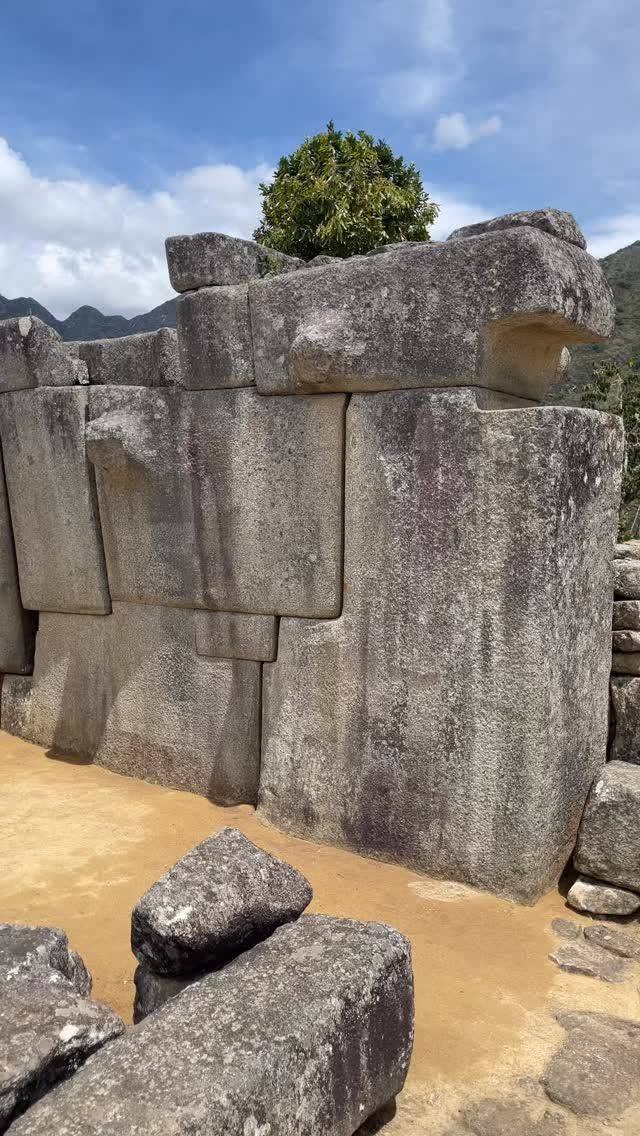
The primary archaeological provenance of these specialized masonry walls is situated within high-status royal and military complexes, most notably at the sprawling archaeological site of Ollantaytambo located in the Sacred Valley of Peru. Because these monumental structures have remained standing and integrated into regional landscapes for centuries, they were not “discovered” through a single isolated excavation event in the modern sense. Instead, their documentation, mapping, and scientific evaluation have evolved through generations of rigorous archaeological study, architectural analysis, and structural surveys conducted by prominent researchers and international insтιтutions seeking to understand indigenous Andean building traditions.

From a material and technological standpoint, the walls featuring these knobs are constructed from exceptionally dense igneous and metamorphic rocks, predominantly pink granite or green diorite, which were painstakingly quarried from nearby mountainsides using stone hammers and bronze implements. The detailed crafting process involved incredible patience and precision; masons chiseled, pounded, and ground each block to achieve тιԍнт dry-stone joints without the use of mortar, while intentionally leaving localized projections unmarred on the outward face of select blocks. The specific geometry of these protrusions—featuring rounded profiles and slight undercuts—reflects a calculated functional design rather than an unfinished state or an aesthetic whim.
From a functional and utility standpoint, these protruding features played a critical logistical and structural role during the grueling construction phase of Incan megalithic architecture. Archaeological evaluations suggest that the knobs acted primarily as anchor points and lifting bosses, allowing workers to secure thick rope slings, wooden levers, and scaffolding to hoist, maneuver, and guide multi-tonne blocks into place with pinpoint accuracy. Additionally, some researchers note that these projections likely supported temporary wooden scaffolding or props to stabilize and adjust stones during the meticulous trial-and-error fitting process required for seamless polygonal masonry.
The ongoing interpretation of these remarkable construction methods has been significantly shaped by multidisciplinary archaeological investigations, drawing on pioneering field studies by scholars such as Jean-Pierre Protzen, who conducted meticulous experimental analyses on Inca quarrying and transport logistics. While the individual stonemasons of antiquity remain anonymous, their collective mastery reflects a highly centralized state organization capable of mobilizing specialized labor guilds. Today, these monumental sites are legally protected under Peruvian cultural heritage laws and are safeguarded within protected archaeological zones, continuing to inspire global academic inquiry into the ingenuity of ancient builders.
✓ hoangduc
Dating back to the mid-15th century during the height of the Inca Empire under the reign of Emperor Pachacuti, the monumental stone structures of the Andean highlands…