Masterpieces of Imperial Engineering: The Interlocking Polygonal Masonry of Cusco
Posted by hoangduc - October 19, 2026
The extraordinary dry-stone masonry exemplified in this detailed pH๏τograph represents one of the most famous and technically advanced architectural achievements of the pre-Columbian world, discovered within the heart of the ancient Inca capital of Cusco, Peru. Situated at high altitude in the Peruvian Andes, sites such as the Palace of Inca Roca along Hatun Rumiyoc Street, the Sun Temple (Coricancha), and the fortress of Sacsayhuamán feature walls built entirely without mortar. The image showcases a classic example of imperial ashlar and polygonal masonry: mᴀssive stone blocks meticulously carved with multi-angled facets, bevel-edged joints, and slightly pillow-faced surfaces that fit together with absolute precision. As a central testament to Andean urbanism, these stone façades illustrate the remarkable capacity of ancient builders to manipulate dense igneous rock into resilient, harmonious architectural forms.
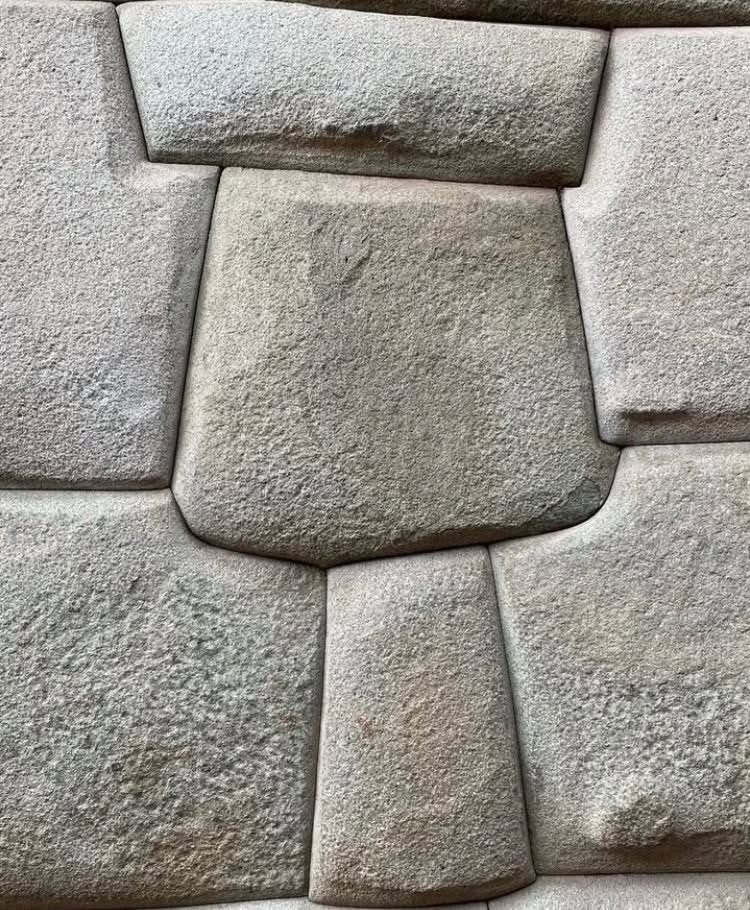
From a chronometric and historical perspective, this style of monumental stone architecture is firmly dated to the late Imperial Inca Period, spanning the 15th to the early 16th centuries AD (circa 1438–1532 AD). The energetic urban redevelopment of Cusco into an administrative and ceremonial metropolis took place primarily under the reign of the expansionist Sapa Inca Pachacuti Yupanqui and was continued by his successor Topa Inca Yupanqui. Archaeological dating derived from organic materials found in underlying terrace foundations, combined with ceramic typologies and early colonial records, confirms that these precision-fit stone structures were constructed during the empire’s golden age shortly before the arrival of the Spanish conquistadors.
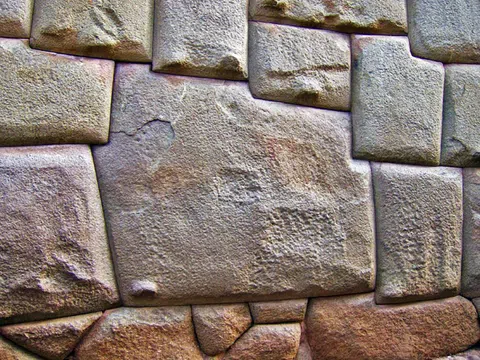
In terms of raw materials and craftsmanship, the Inca masons selected exceptionally hard, durable local rocks, predominantly green diorite, dark andesite, and pink granite quarried from nearby sites like Rumiqolqa and Cachiccata. Fabrication was accomplished without iron tools, draft animals, or wheels; instead, craftsmen used dense hammerstones made of river cobbles (diorite or hemaтιтe) to systematically pound, peck, and abrade the rock surfaces. Each stone was custom-shaped with rounded edges, chamfered seams, and exact socket-and-tenon contours, requiring stonecutters to continually test and refine the fit against adjacent blocks until no gap remained. The subtle concave-convex jointing visible in the pH๏τograph allowed multi-ton stones to lock together seamlessly while diffusing load pressure evenly across the wall course.

Functionally and structurally, this intricate interlocking design provided essential anti-seismic resistance in a region prone to severe Andean earthquakes. Because the walls were erected without rigid mortar, the dry-stacked polygonal blocks act as dynamic shock absorbers during seismic tremors; the stones can flex, slide slightly, and settle right back into their original positions without structural fracturing or collapse. Symbolically, these flawless, impenetrable stone walls served to project the absolute political authority, spiritual order, and divine authority of the Sapa Inca, framing the outer enclosures of sacred palaces, royal compounds, and state storehouses.
Modern scientific exploration, conservation, and structural documentation of Cusco’s Inca masonry have been conducted under the auspices of the Ministerio de Cultura del Perú (formerly the Insтιтuto Nacional de Cultura) alongside international archaeological teams. Landmark studies led by architectural archaeologists like Jean-Pierre Protzen have utilized experimental stoneworking methodologies and 3D pH๏τogrammetric modeling to reconstruct the quarrying, transport, and pounding techniques used by ancient Inca stonemasons. Today, these extraordinary walls remain protected as part of the UNESCO World Heritage City of Cusco, continuing to inspire researchers and visitors worldwide with their enduring engineering excellence.
✓ hoangduc
The extraordinary dry-stone masonry exemplified in this detailed pH๏τograph represents one of the most famous and technically advanced architectural achievements of the pre-Columbian world, discovered within the…